A large majority of the parties and members of the Riksdag today support continued military aid and arms deliveries to Ukraine in the war against Russia, instead of working for a peaceful, humanitarian solution to the war and lasting peace in Europe.
14 million Ukrainians have so far been forced to flee their homes, over 8 million of them to other countries, primarily within Europe. Tens of thousands of civilians and hundreds of thousands of young Ukrainian and Russian soldiers have lost their lives.
Instead of investing in continued war, Sweden now needs to work for peace in Europe. As a peace mediator, Sweden could start from Zelensky’s peace formula, which Sweden now supports, but add the demands Russia has for being willing to accept a sustainable peace, because the alternative to a one-sided peace solution is to crush Russia, which is neither realistic, desirable, nor the path to a lasting peace where Europe becomes a safe continent again.
A peace formula that meets the demands of both Ukraine and Russia would require a balance between Ukraine’s territorial integrity and Russia’s security interests. Here are some possible elements that could be included so that both parties feel represented:
Territorial compromise
- A division or autonomy for certain regions such as Donetsk and Luhansk, where these areas receive a special status with self-government but formally remain part of Ukraine. This could satisfy Russia’s demand to protect Russian-speaking populations, while Ukraine’s borders are recognised.
- The Crimea question could be handled through a long-term negotiated solution or an international referendum on Crimea’s future.
Neutrality for Ukraine
- Ukraine could agree to become a neutral state, without NATO membership, something Russia has long demanded. In exchange, Ukraine would receive security guarantees from both the West and Russia to ensure its sovereignty and independence.
Sanctions and economic compensation
- Russia could demand that Western sanctions be lifted gradually as part of an agreement, while Ukraine receives financial support for reconstruction from international actors, possibly with some contribution from Russia for the damage caused by the war.
Security guarantees
- Russia has previously expressed concern about NATO’s expansion and presence near its borders. Part of a compromise could be an agreement that NATO does not expand further east, together with multilateral agreements on border security and military disarmament in the border areas.
International mediation and monitoring
- A neutral third party or international organisation, such as the UN or the OSCE, could monitor the implementation of an agreement, in particular by monitoring ceasefires, protecting civilians and maintaining the territorial status quo until a long-term solution is reached.
Peace in Europe
Such a compromise would require extensive international support and confidence-building measures, since both parties may need to make significant concessions to reach a lasting solution. Only a peace proposal that takes both parties’ interests into account is a realistic peace proposal that can deliver lasting peace.
This should be Sweden’s approach to this war, instead of inciting continued death and destruction by sending more and heavier weapons.
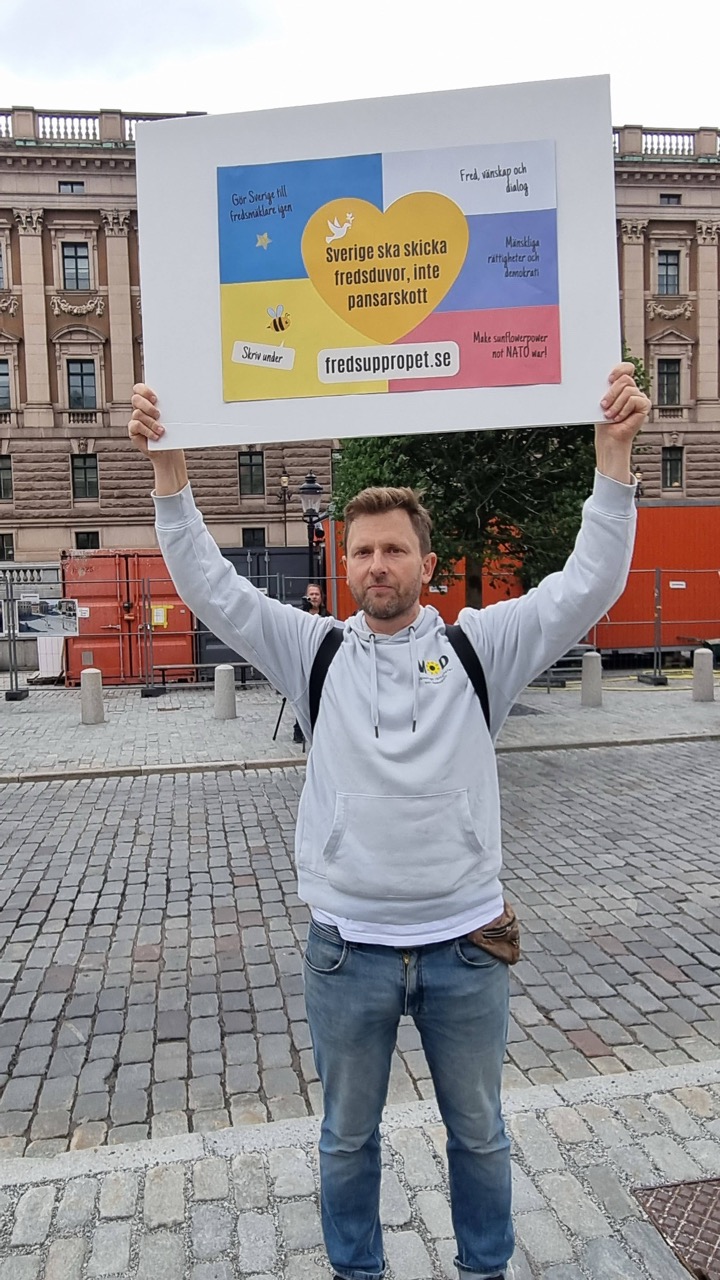
Join and support the MoD party today if you too want Sweden to become a peace-defending country again! Sign the appeal for a peaceful solution to the war in Ukraine at fredsuppropet.se (in Swedish).
Andreas Sidkvist, party leader of MoD, Stockholm, 10 September 2024
If you publish the op-ed in other channels, any of these images may be used freely. Please credit MoD Media as the photographer.


